Metropolis Editor Susan Szenasy Talks Seattle Design

Susan Szenasy has been the editor in chief of Metropolis magazine, a New York-based publication devoted to world design and architecture, for almost 30 years. She is an internationally recognized authority on sustainability and design, and sits on the board of organizations like the Council for Interior Design Accreditation and the Landscape Architecture Foundation. Susan recently came to Seattle to share a dialogue with an interested audience at an overflowing Seattle Design Festival event at Cornish College. I had an opportunity to sit down with Susan the morning after the event and hear a bit more about why she thinks the next big thing in art and architecture will come out of Seattle.

metropolis covers

Continue reading “Metropolis Editor Susan Szenasy Talks Seattle Design”

TwispWorks (Part Two)

Twisp is a mountain community of workers relying on their hands and the natural resources around them, and has been since it was founded in 1897. The entire Methow Valley is full of people creating new things, both out of necessity and inspiration. When the historic Forest Service headquarters was decommissioned in 2002, the Twisp neighborhood had strong ideas about what should be done with the building vacant. They wanted to honor the site’s past and its significance to local history and industry, but use the space for a new project that will help Twisp look forward.

“Mostly we wanted to make something that the public can benefit by, that is able to give back to the community,” says a former local Forest Ranger, “If it couldn’t be a ranger station, I think [TwispWorks] is the next best option.”

TwispWorks

Continue reading “TwispWorks (Part Two)”

Over the River and Through the Woods: How Broadband Reaches Rural Washington

Northwest Open Access Network (NoaNet) is changing how Washington residents surf the web. Metropolitan cities like Seattle and Bellevue have long had access to broadband connections, enabling the Pacific Northwest to stay at the forefront of many existing and emerging industries. However, through an infusion of nearly $140 million in federal grants from the Department of Commerce’s National Telecommunications and Information Administration (NTIA), NoaNet is adding 1,000 miles of broadband all across the state. This expansive project, one of the largest in the country, will bring reliable, high-speed Internet to nearly 2,000 hospitals, libraries, schools and universities in rural Washington communities.

Continue reading “Over the River and Through the Woods: How Broadband Reaches Rural Washington”

Bertschi School: Living Building to Live Up To

Kids love gross things. It’s one of those constants in life that you can depend on like clockwork, like taxes or shoppers behaving like inhuman monsters at Black Friday sales. But Bertschi School in Seattle (also my alma mater) uses this fact to their advantage in their new Living Science Building, which is changing how kids learn about the world they stand to inherit.

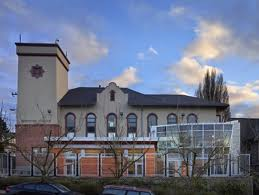
Bertschi School, on 10th Avenue East in Seattle, was founded by Brigitte Bertschi in 1975.
Bertschi School, on Capitol Hill in Seattle, was founded by Brigitte Bertschi in 1975.

Continue reading “Bertschi School: Living Building to Live Up To”

Global Perspective: Uganda

During the summer of 2006 after graduating high school in Seattle, I traveled to Uganda with a group that was a neutral combination of church and school: a group of teachers at a religious primary school had previously visited the country, along with a university professor, a pastor and congregation members, a nun and 4 students from my high school. We spent a month distributing donated medical supplies directly to hospitals and schools, which are run by the Sisters of the Daughters of Mary nuns. These are a handful of my favorite photographs from that trip.

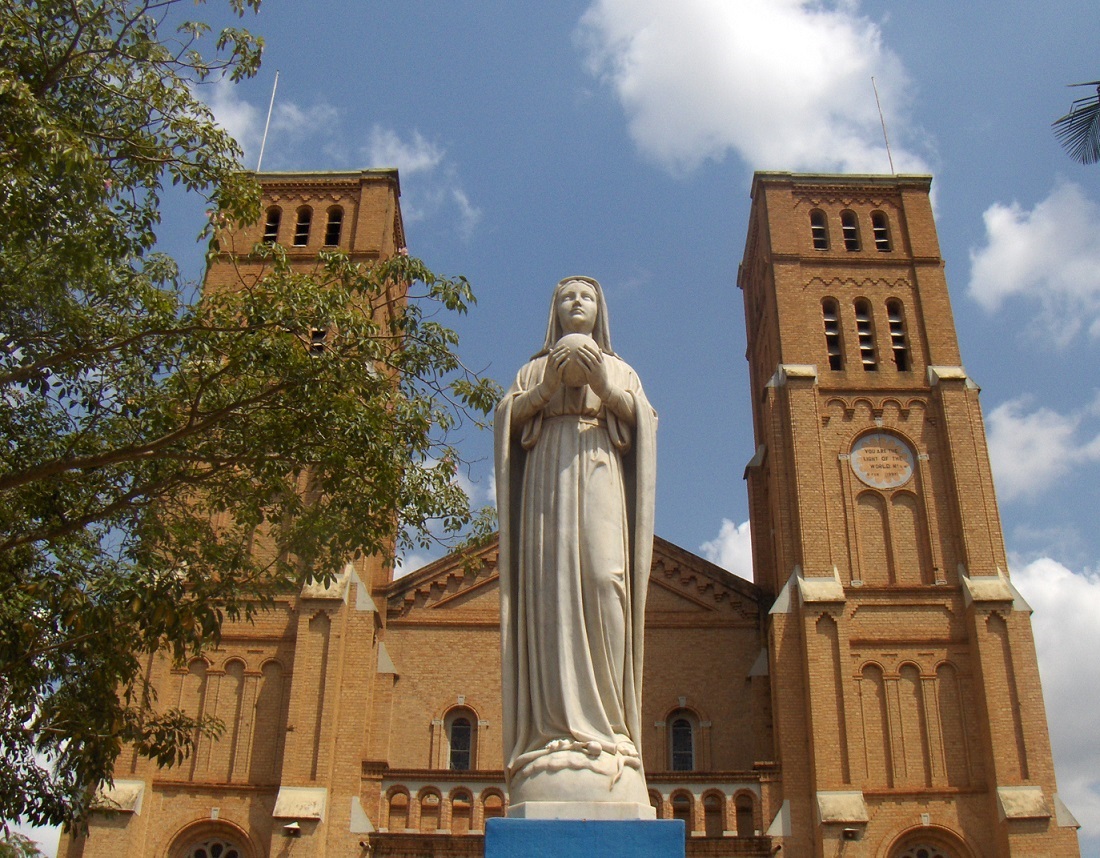
Church of the Daughters of Mary and Joseph in Masaka, Uganda. Photo credit: Louisa Gaylord
Church of the Daughters of Mary and Joseph in Kampala, Uganda. Photo credit: Louisa Gaylord

Continue reading “Global Perspective: Uganda”

Rock of Ages: the Grand Canyon

The Grand Canyon is 270 miles long, up to 18 miles wide, and took approximately 17 million years to form. Think about that, 17 million years. To put that into context, that was about the time of the cycle of Ice Ages began, and was at least 10 million years before the earliest form of humans evolved (Creationists, please exit stage left). What appears to be nothing but a jagged crack in the parched Arizona landscape is actually a thriving oasis of life in the middle of a red desert. It also provides an incredibly accurate slice of what happened to this geographic area completely beyond our scope of Now.

OLYMPUS DIGITAL CAMERA

Continue reading “Rock of Ages: the Grand Canyon”

Better Off: the Minimite Approach to Technology

Eric Brende began at MIT to understand and deconstruct what media theorist Neil Postman calls our Technopoly, “a way of life that seeks technological answers first before other means, or even before thinking through the questions.” Since the relatively recent introduction of modern technology into our society, Moore’s Law (named appropriately for Intel’s co-founder) dictates that electronic tech grows exponentially: as our tech becomes more sophisticated, it is used in turn to produce even more complex systems. This expansion was a catalyst for Brende; he writes, “What I wanted to discover was a balance between too much machinery and too little, or better yet, how to arrive at it wherever one found oneself.” And so, tired of being surrounded by people who drive their cars to the gym to get exercise, Eric and his new wife decided to experiment with living completely tech-free.

Continue reading “Better Off: the Minimite Approach to Technology”

Biomimicry: what we can learn from the designs of evolution

Biomimicry provides an environmentally-friendly solution to the energy crisis. Derived from the Latin bios meaning organic life, and mimesis meaning to imitate, biomimicry is the study of gaining design inspiration from natural processes to solve human problems. The act of evolution over time ensures that everything that is alive and thriving today, from plant functions to the hydrodynamic shape of fish, is successful and imaginative enough to adapt through millions of years of testing. The goal of the Biomimicry Institute in Montana is to “nurture and grow a global community of people who are learning from, emulating, and conserving life’s genius to create a healthier, more sustainable planet.”

The "lotus effect" allows water to roll easily off the leaves to feed the plant's roots.
The “lotus effect” allows water to roll easily off the leaves to feed the plant’s roots.

Continue reading “Biomimicry: what we can learn from the designs of evolution”