
Another Chapter in the Epic Saga
Gather ‘round children, and I will spin you a tale as old as time itself: Seattle’s Alaskan Way Viaduct. Originally completed in 1953, the Viaduct was created to alleviate traffic congestion from trucks, trains and wagons bringing cargo to and from the Port of Seattle. Transportation studies showed that the best way to control port traffic was to have two north-south corridors running between downtown and the waterfront: the Viaduct was created first because the City of Seattle already owned the land, and I-5 was added in the 1960’s.


Bertschi School: Living Building to Live Up To
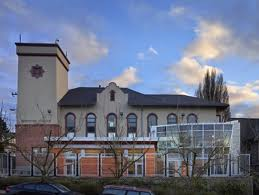
Kids love gross things. It’s one of those constants in life that you can depend on like clockwork, like taxes or shoppers behaving like inhuman monsters at Black Friday sales. But Bertschi School in Seattle (also my alma mater) uses this fact to their advantage in their new Living Science Building, which is changing how kids learn about the world they stand to inherit.
Continue reading “Bertschi School: Living Building to Live Up To”
Global Perspective: Uganda
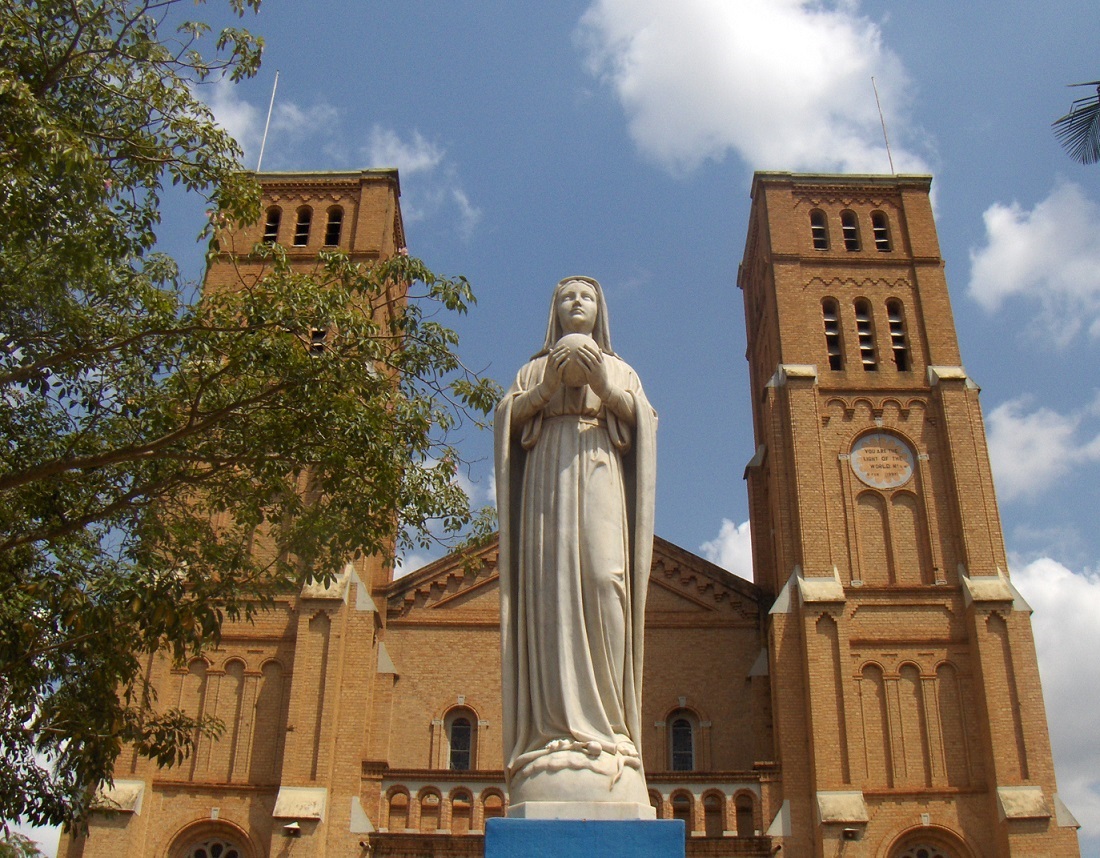
During the summer of 2006 after graduating high school in Seattle, I traveled to Uganda with a group that was a neutral combination of church and school: a group of teachers at a religious primary school had previously visited the country, along with a university professor, a pastor and congregation members, a nun and 4 students from my high school. We spent a month distributing donated medical supplies directly to hospitals and schools, which are run by the Sisters of the Daughters of Mary nuns. These are a handful of my favorite photographs from that trip.
Rock of Ages: the Grand Canyon
The Grand Canyon is 270 miles long, up to 18 miles wide, and took approximately 17 million years to form. Think about that, 17 million years. To put that into context, that was about the time of the cycle of Ice Ages began, and was at least 10 million years before the earliest form of humans evolved (Creationists, please exit stage left). What appears to be nothing but a jagged crack in the parched Arizona landscape is actually a thriving oasis of life in the middle of a red desert. It also provides an incredibly accurate slice of what happened to this geographic area completely beyond our scope of Now.

Better Off: the Minimite Approach to Technology
Eric Brende began at MIT to understand and deconstruct what media theorist Neil Postman calls our Technopoly, “a way of life that seeks technological answers first before other means, or even before thinking through the questions.” Since the relatively recent introduction of modern technology into our society, Moore’s Law (named appropriately for Intel’s co-founder) dictates that electronic tech grows exponentially: as our tech becomes more sophisticated, it is used in turn to produce even more complex systems. This expansion was a catalyst for Brende; he writes, “What I wanted to discover was a balance between too much machinery and too little, or better yet, how to arrive at it wherever one found oneself.” And so, tired of being surrounded by people who drive their cars to the gym to get exercise, Eric and his new wife decided to experiment with living completely tech-free.
Continue reading “Better Off: the Minimite Approach to Technology”
Biomimicry: what we can learn from the designs of evolution
Biomimicry provides an environmentally-friendly solution to the energy crisis. Derived from the Latin bios meaning organic life, and mimesis meaning to imitate, biomimicry is the study of gaining design inspiration from natural processes to solve human problems. The act of evolution over time ensures that everything that is alive and thriving today, from plant functions to the hydrodynamic shape of fish, is successful and imaginative enough to adapt through millions of years of testing. The goal of the Biomimicry Institute in Montana is to “nurture and grow a global community of people who are learning from, emulating, and conserving life’s genius to create a healthier, more sustainable planet.”

Continue reading “Biomimicry: what we can learn from the designs of evolution”
Seattle’s “Trashion” Designers
In a span of several years, our society has taken an interest in biodiesel cars, wind power and composting. It makes us feel proactive to be helping the environment as a part of our everyday lives. But few take recycling to the level of outlandish fun as the International Sustainability Institute. ISI’s Trash Fashion Bash event is designed to “entertain, educate and empower others to rethink, reuse and recycle” by making haute couture fashions from society’s trash to be featured in benefit runway shows. It begins with a suit.

Sustainability: All of Us for All of Time
Whenever I mention that I am enthusiastic about sustainability, I get two reactions: people who assume I am talking about green buildings and architecture, and people who are tired of hearing about being eco-friendly. It’s true that the media has saturated our society with messages of the virtues of being sustainable, but only if we buy more things. “These plastic bottles of water have 15% less plastic in the cap than before, but are still sold in twice-wrapped 24-packs.” Green washing has become a major selling point, but people only remember what’s in front of their faces. How did the idea of sustainability become so warped that people roll their eyes when it comes up in conversation?
Because we have the wrong idea about sustainability altogether.
Continue reading “Sustainability: All of Us for All of Time”
 Louisa Gaylord