Data Science Profiles: Michelle Ndugulile

Michelle Ndugulile (‘23) recently graduated from the University of Washington with a B.S. in Biology and a minor in Data Science. Prior to her undergraduate studies at UW, Michelle was interested in a variety of STEM subjects, such as math, anatomy, and physiology. But it was biology that captured her interest the most, and inspired her to pursue it in college and into a future career.

Continue reading “Data Science Profiles: Michelle Ndugulile”

Data Science Profiles: Ben Roscoe

The University of Washington launched the Data Science Minor in Fall 2020 to help undergraduate students gain data science skills and literacy to help supplement the area of their major. Since its inception, the minor has been one of the fastest growing programs at UW, as students see how widely utilized data science tools are and the value they bring to their areas of study. Since UW students can declare a minor during their sophomore year, the graduating class of 2023 was the first to contain students who have been enrolled in the Data Science Minor for the majority of their studies.

Continue reading “Data Science Profiles: Ben Roscoe”

Groundwater Insecurities in the Colorado River Basin

Groundwater is a vital source of water for a large part of the United States; it’s used for drinking and irrigation, keeps wells and springs filled, and generally contains fewer contaminants than surface water. Declines in groundwater levels are a growing problem in recent years, resulting in lakes and reservoir levels dropping, and less water flowing in streams and rivers. One such river is the … Continue reading Groundwater Insecurities in the Colorado River Basin

Assessing Heat Pump Usage Across Alaska

2023 is on track to be one of the hottest years across the globe. Warming occurs at double the global rate in Arctic regions, necessitating the need for viable decarbonization options that help move away from dependence on fossil fuels. This summer, one of the eScience Institute’s Data Science for Social Good (DSSG) teams at the University of Washington has been researching heat pumps for heating and … Continue reading Assessing Heat Pump Usage Across Alaska

Learning Data For Good

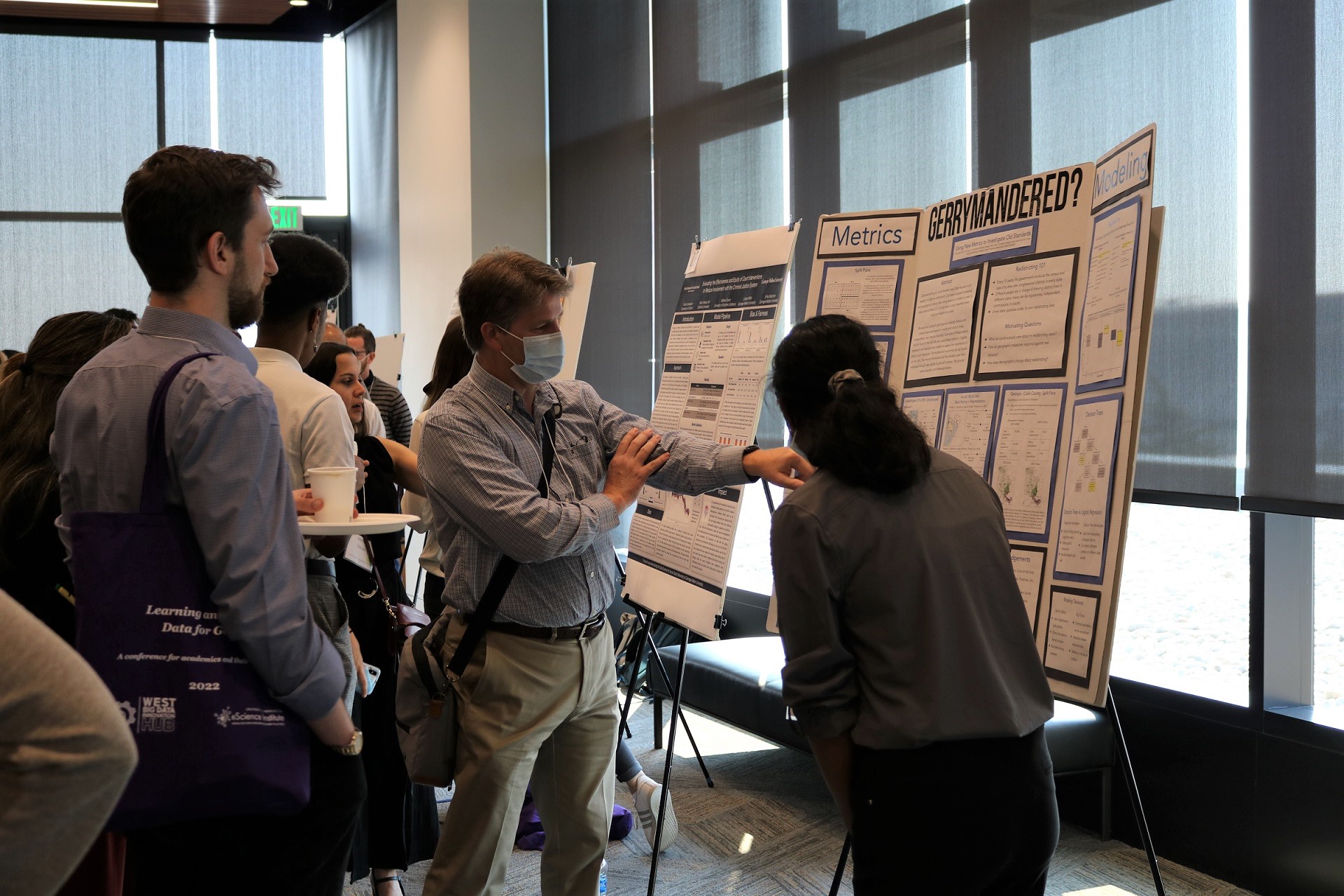
Last month the eScience Institute held the “Learning and Doing Data For Good” conference, an event for current students and alumni in university-based data for good programs, their project partners, and data science professionals. The goal was to inspire discussions and networking with others who are motivated to learn from and meet the needs of communities and people using data for change. The eScience Institute co-hosted the conference with the West Big Data Innovation Hub, the Academic Data Science Alliance, and the University of British Columbia’s Data Science Institute.

Continue reading “Learning Data For Good”

Discovering How AI is Utilized Across UW

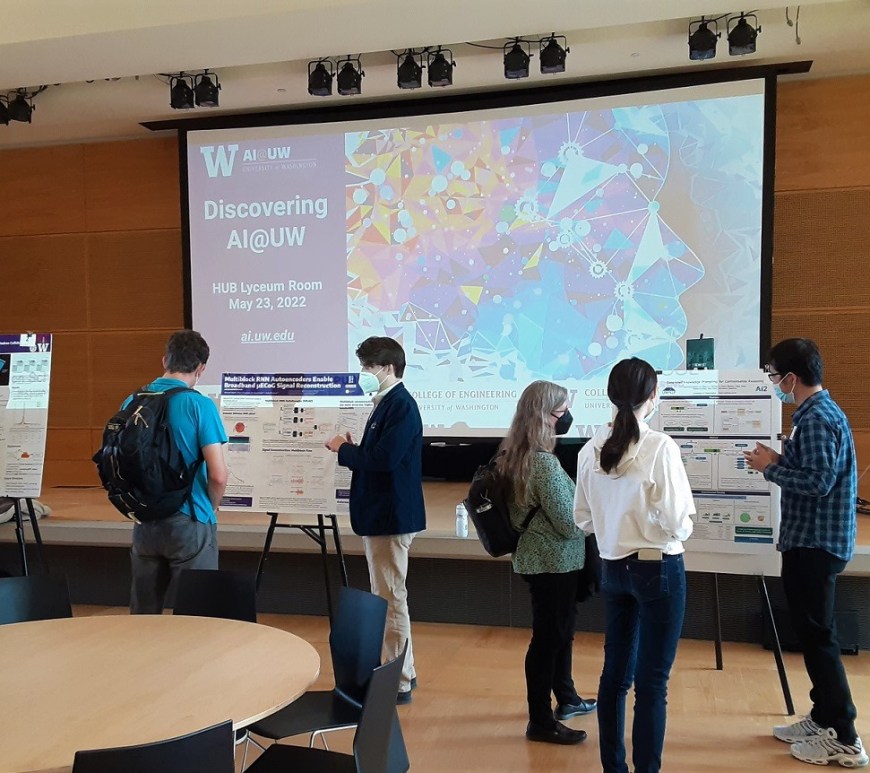
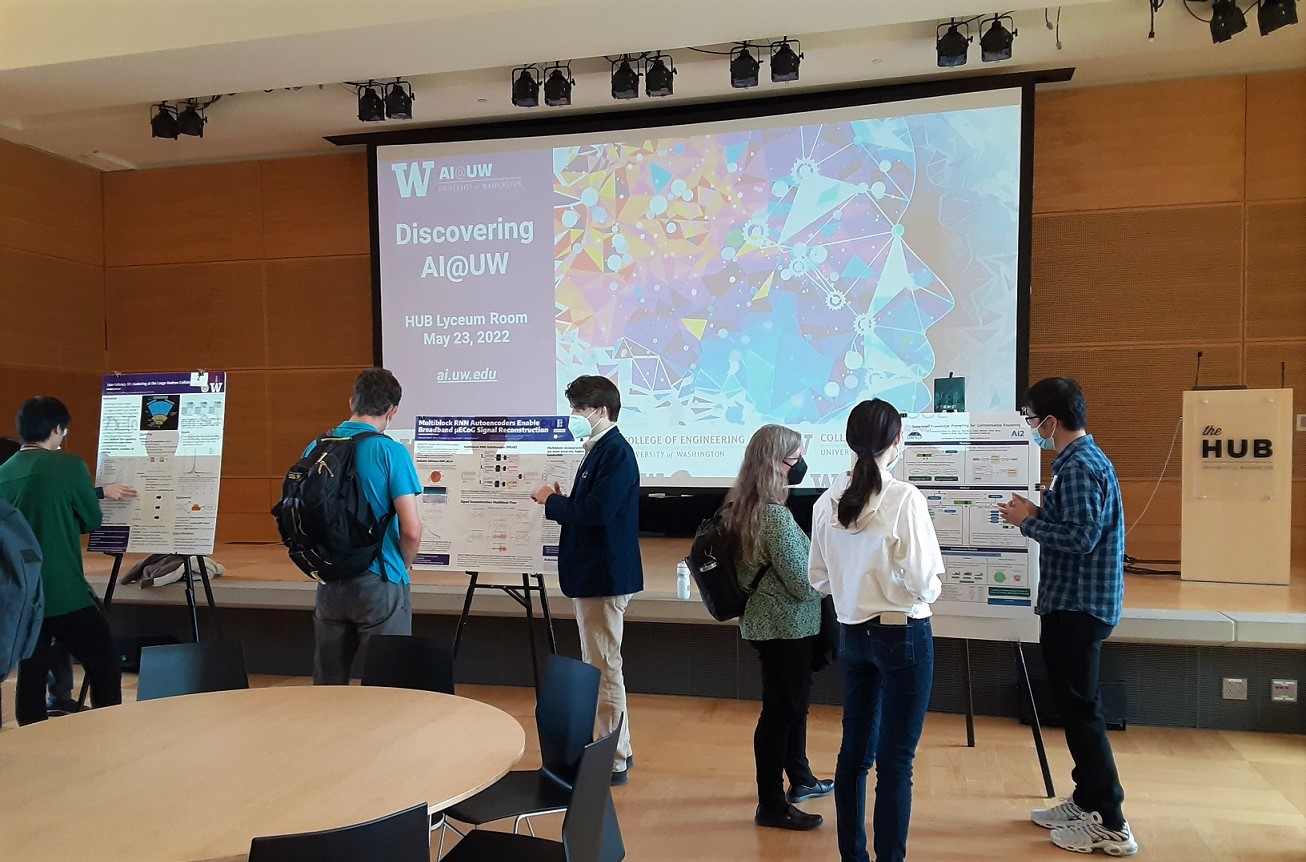
The eScience Institute co-hosted Discovering AI@UW, an event that brought together artificial intelligence experts from across the University of Washington campus to discuss their projects and how they intersect. Over 180 people attended the event, both streaming online via zoom and in person in the Lyceum Room of the Husky Union Building on campus, and included UW faculty and staff, postdoctoral fellows, graduate students, and undergraduates. “The energy around all these [AI initiatives] that people are doing here makes me tremendously excited,” said Nathan Kutz, Senior Data Science Fellow and Adjunct Professor of Electrical Engineering & Physics. “We not only have a university that is incredibly collaborative, but we also have so much work going on in so many different domains.”

Continue reading “Discovering How AI is Utilized Across UW”

Evolving the Hackweek Model with ICESat-2 2022

The eScience Institute hosts a variety of hackweeks every year, which are designed to immerse participants in collaborative project work around a specific topic. Hackweeks try to blend elements of a hackathon, where participants work collaboratively in project teams, with tutorials on a variety of data science topics in an immersive and inclusive environment. eScience hackweeks provide a deep dive into an area of science with a focus on how data science methods and tools can be utilized to further research. For each hackweek, the program format evolves and is modified and adjusted to best suit the problem space and the user community. A great example of this process is the ICESat-2 Hackweek, which wrapped up earlier this year.

Continue reading “Evolving the Hackweek Model with ICESat-2 2022”

Python for Humanities: an Intro for Researchers

The eScience Institute and UW Libraries Open Scholarship Commons recently co-hosted a workshop called “Python, your personal research assistant” for participants studying the humanities to explore the Python programming language and how to use it as a tool to aid in qualitative humanities work. Led by eScience Technical Education Specialist Naomi Alterman, the program encouraged students to decipher lines of Python, and learn how to make use of it to complete repetitive tasks. “I’m expecting folks to show up to the workshop with no experience with computer code,” Naomi Alterman said. “And I want them to leave with a suitable argument as to why it’s useful for them in the future.”

Continue reading “Python for Humanities: an Intro for Researchers”

Mapping Fungal Relationships in Trees

Korena Mafune is a 2021 Washington Research Foundation postdoctoral fellow in the University of Washington’s Department of Civil and Environmental Engineering, where she studies the symbiotic interactions among plants, fungi, and bacteria. She received her PhD from UW’s School of Environmental and Forest Sciences, where she studied the root-associated fungal communities of old-growth bigleaf maple trees in Washington’s Queets and Hoh temperate rainforests. These trees accumulate layers of leaves and other organic matter on their canopy branches, which decay over time and produce a thick mat of organic soil high above the forest floor. Bigleaf maple trees have the capability to grow extensive adventitious rooting networks into these canopy soils which associate with fungal communities that thrive in the damp Pacific Northwest forests; some of these fungal associates attach to the roots and expand their fungal network outwards to aid the tree in taking up plant nutrients like nitrogen and phosphorus which the trees rooting system may not be able to reach on its own.

Continue reading “Mapping Fungal Relationships in Trees”

Modeling & Predicting Tree Growth with Data Science


Stuart Ian Graham is a graduate student in the University of Washington’s Biology program who recently published a paper with Senior Data Science Fellow and eScience Institute Research Scientist Ariel Rokem, along with others from the University of Washington, Université de Montpellier, and University of California Los Angeles. The paper, published in the Forests journal and titled “Regularized Regression: A New Tool for Investigating and Predicting Tree Growth,” initially grew from a 2019 Winter Incubator project at eScience, which paired Graham and Rokem together to utilize data science to explore how neighboring tree species can influence one another’s growth rates in Mt. Rainier National Park in Washington State.

Continue reading “Modeling & Predicting Tree Growth with Data Science”